


Yes. A burst pipe is an emergency for as long as water is still coming out of it, and the first thing to do is close the main shutoff, before you call anyone. Once the main is closed and the water has stopped, it usually becomes an urgent repair rather than an emergency, with one exception that people miss: anything that got wet has roughly 24 to 48 hours to be dried out before mold becomes a real risk.
It is still an emergency right now if the water will not stop at the main, if water is near outlets, the electrical panel or a light fixture, if a ceiling is sagging, or if the house will drop below freezing tonight with other pipes still full.
Updated October 21, 2026.
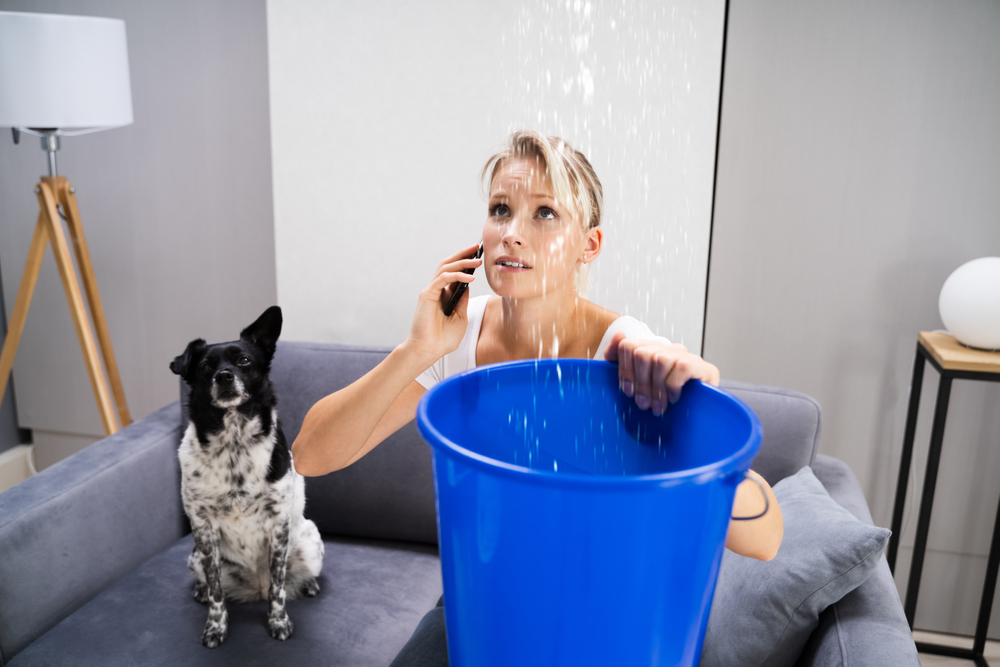
A well-functioning plumbing system relies on a complex network of pipes. However, when a pipe in your home bursts, it is in fact considered a plumbing emergency that requires immediate attention. Burst pipes can wreak havoc on your plumbing system, disrupt essential utilities, and damage the interior of your home.
To effectively address this situation, familiarize yourself with the common causes of pipe damage, how to recognize the telltale signs of a burst pipe, and what to do while waiting for an emergency plumber to arrive.
Signs You May Have a Burst Pipe
Burst pipes can happen for many reasons. If you notice these signs, you may have a burst pipe in your home:
- Low water pressure. If the water pressure from your faucets or shower head suddenly drops or seems much lower than usual, a burst pipe may be the culprit.
- Pooling water. Have you recently found puddles of water forming inside your home or yard? They may indicate an underground pipe has burst and is leaking water to these spots.
- Unexplained running water sounds: If you hear water running behind your walls while none of the faucets or showers are on, it may mean water is escaping from a burst pipe.
- Discolored walls or ceilings: If wet spots, dark stains, or bulges form on walls or ceilings, they may be caused by water accumulation from a burst pipe, especially if they appear suddenly.
- Odd or musty smells: Pooling water due to a burst pipe may cause persistent moldy or musty smells. Mold or mildew can grow where your home’s structures have been exposed to water for extended periods, resulting in these odors.
- Sudden spike in water bills: If your water bills have increased suddenly and unexpectedly, it may mean your home is leaking water. While burst pipes are a possible cause, check for other signs or contact an emergency plumber near you to help you find them.
What Can Cause Your Pipes to Burst?
In South Carolina, there are a few common causes of burst pipes, including:
- Freezing temperatures: Winters in Charleston are cold enough to freeze the water inside your pipes. As water turns to ice, it expands, putting pressure on the piping from the inside and increasing the risk of bursting.
To prevent your pipes from freezing during the colder months, ensure your pipes are properly insulated. You can do this by wrapping them with insulating materials like foam sleeves or heat tape. Also, turn on your faucets to create a slight drip. This can relieve water pressure and prevent bursting.
- Clogged pipes: Too much debris in your pipes can cause clogs, reducing water flow. If a clog remains unaddressed for too long, it can cause water pressure to increase, eventually causing leaks or rupturing the pipe.
Standard solutions to dislodge a clog include using a chemical drain cleaner, plunger, or hand auger. If they aren’t sufficient to address the clog, or if your pipe has already burst, contact an emergency plumber as soon as possible.
- Hard water: Hard water is water high in minerals, such as calcium or magnesium. As it runs through the pipes, hard water eventually leaves mineral deposits, affecting water pressure and increasing the risk of a burst pipe. Consult an experienced plumber for solutions to hard-water issues or if your pipe bursts.
- Rust and corrosion: Metal water pipes become increasingly vulnerable to rust and corrosion as they age. Rust and corrosion degrade your pipes and may discolor the water, turning it yellow or brown. If this happens, call a plumber to assess the situation and determine how to fix a burst pipe due to this issue.
Steps to Follow After Identifying a Burst Pipe
If you find a burst pipe, keep calm and follow the right steps to minimize damage to your home. A professional plumber from Blue Collars can help you understand how long it takes to fix a burst pipe and provide a quote for plumbing repairs.
- Cut the water flow: If there’s a burst pipe, stop the water flow to prevent damage. Find and close your main water valve to stop the leak. Typically, you turn the valve clockwise (right), or if you have a lever, move it perpendicular to the pipe to shut off the water flow.
- Drain the other pipes: Once the water main is off, drain the water from as many other pipes as possible in your home. Flush every toilet and open every faucet and shower head until they run dry. If you have a water heater, drain the hot water from it as well. Draining your pipes helps reduce the risk of further pipes bursting or leaking.
- Inspect the burst pipe: Locate the pipe that burst and inspect the size and extent of the rupture. Place a bucket or other container under the burst pipe to catch any remaining water.
- Contact an emergency plumber: A 24-hour emergency plumber near you has the tools and skills to fix your burst piping. Our licensed and insured plumbers at Blue Collars Plumbing will inspect your damaged pipes, conduct necessary repairs or replacements, and check your electrical system to ensure it hasn’t been water-damaged.
Emergency Now, or First Thing Tomorrow?
Most burst pipe guides say "call an emergency plumber" and stop there. The honest answer depends on what the water is doing once you have tried to stop it.
| What you see | How urgent | What to do |
|---|---|---|
| Water still running after the main is closed | Emergency | The leak is upstream of your shutoff, or the shutoff is not holding. In the Charleston Water System area, call the utility at (843) 727-6800 so it can be shut off at the meter, then call a plumber. |
| Water near outlets, the panel, or a ceiling light | Emergency | Stay out of standing water. Turn off the affected circuits only if you can reach the panel from a dry spot. |
| Ceiling bulging or stained and spreading | Emergency | Keep people and pets out from under it and get the water off at the main. |
| Main closed, water stopped, freezing night ahead | Emergency | Other pipes in the same crawl space or wall are likely to freeze too. Open the faucets to drain the system and get help before the next cold night. |
| Main closed, water stopped, small area wet | Urgent, not an emergency | Start drying now. A next-day repair is reasonable if you can live without water until then. |
| Slow drip or damp spot, no active flow | Book a repair | Put a container under it, watch for spreading, and schedule a visit. |
If you are not sure whether the water has stopped, read your water meter, wait ten minutes with nothing running, and read it again. If the numbers moved, water is still going somewhere.
The Lowcountry Does Not Have One Freeze Date
The most common cause of a burst pipe in this area is a freeze, and "it never gets that cold in Charleston" is exactly the assumption that catches people. The National Weather Service office in Charleston publishes the average first freeze date for each of its stations, based on the 1991 to 2020 climate normals. Inside one metro area they are weeks apart.
| Station | Average first freeze | Average last freeze |
|---|---|---|
| Summerville 4 W | November 12 | March 22 |
| Moncks Corner 4 N | November 26 | March 10 |
| Charleston International Airport | November 27 | March 7 |
| Sullivans Island | November 30 | March 13 |
| Downtown Charleston | December 30 | February 4 |
Read that table the way it applies to your pipes. A house in Summerville sits inside its average freeze window about seven weeks before a house on the peninsula does, and stays in it about seven weeks longer at the other end. The record books go further: the airport has seen a freeze as early as October 25 and as late as April 20.
The Midlands start sooner still. The National Weather Service office in Columbia gives November 3 as the average first 32 degree freeze for Columbia, from its 1948 to 2014 period of record. That is a different period from the Charleston table, so treat it as a guide rather than a like-for-like comparison, but the direction is clear.
A freeze warning on the evening forecast is the signal to act, not the first night you hear pipes knocking.
What the Christmas 2022 Freeze Showed Charleston
The best local evidence for how fast this goes wrong is the freeze over Christmas weekend in 2022.
Live 5 News reported on December 25 that water officials said over 400 customers had reported pipes that had burst or frozen, and that Charleston Water System was producing 100 million gallons of water a day. Two days later the utility told the station its call center had received more than 1,400 calls from customers with leaks in their home, and that demand had come dangerously close to the 105 million gallon threshold that would trigger a boil water notice for everyone.
The same report described crews turning water off at homes with visible leaks that appeared to be empty. That is the part worth remembering. A burst pipe in an occupied house is found in minutes. In a house left empty over a holiday or a long weekend it can run for days, and the damage scales with the hours, not with the size of the split.
If you are traveling during a cold snap, the Red Cross advises leaving the heat on and set no lower than 55 degrees. Closing the main shutoff before you leave adds a second layer of protection, because a pipe that does split has very little water behind it.
Why Lowcountry Pipes Freeze Where Northern Pipes Do Not
Homes in cold climates are built on the assumption that it will freeze every winter. A lot of Lowcountry housing is not, and the pipes are routed accordingly.
The Red Cross lists the pipes that freeze most often: those exposed to severe cold such as outdoor hose bibs and sprinkler lines, supply pipes in unheated areas like crawl spaces, attics and garages, and pipes that run along exterior walls with little or no insulation. Raised foundations with vented crawl spaces are common here, and so are supply lines run through them, which puts a section of the plumbing in outdoor air.
Practical steps before a freeze, all from the Red Cross guidance:
- Disconnect and drain garden hoses, close the inside valve feeding each outdoor spigot if you have one, and leave the outside spigot open so trapped water can expand.
- Open kitchen and bathroom cabinet doors on exterior walls so warm air reaches the pipes.
- Let the cold water drip from a faucet served by exposed pipes. Moving water is harder to freeze.
- Keep the thermostat at the same setting day and night during the cold spell.
- Insulate exposed pipes in crawl spaces and attics with pipe sleeves or UL-listed heat cable.
Our longer guide to preventing frozen pipes covers each of these in more detail.
A Note on Hard Water in Charleston
Hard water is listed above as a cause of burst pipes, and in hard water regions that is fair. It is less of a factor here. Charleston Water System describes its supply as moderately soft, with an average hardness of 58.4 ppm, or 3.4 grains per gallon.
In this area a pipe that fails without a freeze is more often failing because of its age and its material. Older galvanized steel corrodes from the inside, and that is the kind of slow failure that ends in a sudden split. If your home still has it, our post on galvanized pipe in Charleston explains how to tell and what the federal rule does and does not require.
Thawing a Frozen Pipe Without Making It Worse
A frozen pipe has not necessarily burst yet. If you open a faucet and only a trickle comes out on a cold morning, suspect a freeze, usually where a pipe runs along an exterior wall or where the water line enters the house.
- Know where the main shutoff is before you start. Ice can hide a split. The leak often only shows once the pipe thaws and water pressure returns.
- Open the faucet the pipe feeds, so melting ice has somewhere to go.
- Apply gentle heat with an electric heating pad, a hair dryer, a space heater kept away from anything flammable, or towels soaked in hot water.
- Never use an open flame. The Red Cross is explicit: no blowtorch, kerosene or propane heater, or charcoal stove.
- Check every other faucet. If one pipe froze, others in the same space may have too.
If you cannot find the frozen section, cannot reach it, or cannot get it to thaw, that is the point to call a licensed plumber rather than keep applying heat to a wall.
The Safety Steps a Basic Checklist Leaves Out
The steps above this section are the right order. Three additions make them safer.
Water and electricity. Do not walk through standing water to reach a shutoff if that water is anywhere near an outlet, an appliance or a cord. If the breaker panel is in a dry place you can reach without touching water, turn off the circuits for the wet area. If it is not, leave it and say so when you call.
The water heater. Draining the system, including the water heater, is good advice after the main is closed. Before you drain a water heater, turn off its power at the breaker if it is electric, or set the gas control to off or pilot if it is gas. A tank that heats while empty can damage its heating elements, and drained hot water can scald.
The shutoff itself. In many older homes the main valve has not been turned in years and will not move, or moves and does not seal. If yours fights you, do not force it with a wrench until something snaps. Our post on a shutoff valve that will not turn covers what to do in that situation, and finding your shutoff is worth doing on a calm day, not during a flood.
The 48-Hour Drying Clock
Stopping the water is the first deadline. Drying is the second, and it is the one that decides how much of the damage is permanent.
The EPA's guidance for responding to clean water damage is built around a 24 to 48 hour window, with the aim of drying materials before mold growth starts. The agency is careful to say this is a guideline: mold will not always appear after 48 hours, and drying sooner does not guarantee it will not. A few specifics from that guidance:
- Carpet and backing: extract the water, run a dehumidifier, and use fans to speed drying.
- Drywall: it may be dried in place if there is no obvious swelling and the seams are intact. If it has swollen, it is removed and replaced, and the wall cavity should be ventilated if possible.
That guidance covers clean water from a supply pipe. Water from a drain or sewer line is a different category and needs protective equipment and professional cleanup. In Charleston's humidity, drying also takes longer than the same job would inland, so start the fans the moment the water is off rather than after the plumber leaves.
Who Pays: the Utility, Your Insurer, or You
The utility. In the Charleston Water System area the line is drawn at the meter. The utility is responsible for the pipe from the street to the water meter, and the pipe from the meter into the home is the homeowner's. A break on the street side is CWS's to repair. A break anywhere on your side, including the buried line across the yard, is yours.
Your insurer. The National Association of Insurance Commissioners explains that homeowners policies cover damage from a "sudden and accidental" discharge from a plumbing system, and often cover the resulting water damage when frozen pipes burst, as long as the homeowner took reasonable steps to keep them from freezing. Policies generally require you to keep the home at a minimum temperature, or to shut off the water supply if the home is vacant. If the insurer finds those steps were neglected, the damage may not be covered.
That is one more reason to close the main when you travel in winter, and to photograph the damage and keep the failed section of pipe before anything is thrown away. Your policy wording is what decides it, so call your agent rather than relying on any general rule.
What Drives the Cost of a Burst Pipe Repair
We do not quote a burst pipe over the phone without knowing where it is, and nobody else can either. What moves the price is predictable, so you can judge an estimate when you get one.
- Where the break is. An exposed pipe in a crawl space or under a sink is the simple end. A pipe inside a finished wall or ceiling, or under a slab, means opening something up to reach it.
- What the pipe is made of. A clean split in modern pipe is usually a section repair. A failure in old galvanized pipe often means the pipe on either side is in similar condition.
- How many places froze. After a hard freeze it is common to find a second split once the first is fixed and the water goes back on.
- Whether the shutoff works. A main valve that will not close becomes part of the job.
- When it happens. Work outside normal business hours carries an additional labor charge. We tell you what it is on the phone rather than at the door.
Typical ranges from past work are on our plumbing services page. They are not a quote and not a guarantee. You get the price for your job before any work begins.
Burst Pipe Questions
Is a burst pipe an emergency?
Yes, while water is still coming out of it. Close the main shutoff first. Once the water has stopped it is usually an urgent repair rather than an emergency, unless water reached electrical outlets or fixtures, a ceiling is sagging, the main will not hold, or another freeze is coming with other pipes still full. Anything that got wet should be dried within roughly 24 to 48 hours, which is the EPA's guideline for getting ahead of mold.
What should I do first when a pipe bursts?
Close the main water shutoff, then open the lowest faucets in the house to drain the pipes. Keep away from standing water near anything electrical. Then call a plumber. If the water keeps running after the main is closed, the leak is upstream of your valve or the valve is not sealing, and in the Charleston Water System area the utility can shut it off at the meter: (843) 727-6800.
When do pipes freeze in Charleston?
Earlier than most people expect, and it depends on where you live. National Weather Service averages for 1991 to 2020 put the first freeze at Summerville on November 12, Charleston International Airport on November 27, Sullivans Island on November 30 and downtown Charleston on December 30. Pipes in crawl spaces, attics, garages and exterior walls are the ones at risk.
Should I let my faucets drip when it freezes?
Yes, on faucets served by exposed pipes. The Red Cross advises letting the cold water drip, because water moving through a pipe, even at a trickle, helps prevent it from freezing. Open cabinet doors on exterior walls too, so warmer room air reaches the pipes.
How do I thaw a frozen pipe safely?
Open the faucet it feeds, then warm the pipe with an electric heating pad, a hair dryer, a space heater kept clear of anything flammable, or towels soaked in hot water. Never use a blowtorch, a propane or kerosene heater, or any open flame. Know where your main shutoff is first, because a split often only starts leaking once the ice melts.
Does homeowners insurance cover a burst pipe?
Often, for the water damage. The NAIC explains that homeowners policies cover damage from a sudden and accidental discharge from plumbing, and often cover damage from frozen pipes that burst, provided the homeowner took reasonable steps such as keeping the home at a minimum temperature or shutting off the water if the home is vacant. Your own policy wording decides it, so check with your agent.
Who is responsible for a broken water line in my yard?
In the Charleston Water System area, the utility is responsible for the pipe from the street to the water meter, and the pipe from the meter into the home belongs to the homeowner. A break on your side of the meter, including the buried line to the house, is yours to repair.
Can I wait until morning to call a plumber?
Often, yes, if the main is closed and holding, nothing electrical got wet, and you can manage without water overnight. Start drying immediately either way. If the water will not stop, if a ceiling is sagging, or if another hard freeze is coming with other exposed pipes, do not wait. Our emergency plumbing team answers around the clock in Charleston and Columbia.
Keep Your Pipes Safe with Blue Collars Plumbing
When one of your pipes bursts or another plumbing emergency happens, contact Blue Collars. We offer emergency services 24/7, 7 days a week, to help you address plumbing emergencies like burst pipes in your home. The related question is covered in Is a Clogged Kitchen Sink an Emergency?
Our team of professional plumbers in Charleston, SC and the surrounding communities are proud to serve you. We offer 100% transparent pricing plans, convenient payment options, and sustainable disposal methods for peace of mind. The related question is covered in How to Fix a Burst Pipe: Emergency Tips.
Contact us by text or phone to schedule an emergency visit or for general repairs.
Who wrote this
- SC license
- CLM 117414
- Charleston
- 2157 Rich Street, Ste 203, North Charleston, SC 29405
- Availability
- 24 hours, 7 days, live technician on the phone
- Veterans
- 10% off, mention it when you book
This page is written by the licensed contractor that does the work, not by a national cost aggregator. Every figure on it is either our own pricing or traced to a named primary source in the list below. Check our license before you book us, and before you book anyone else. More about Blue Collars.
